News (click to select category)
Accurately replicate abrasive wear conditions! LLG-225 dry sand rubber wheel wear testing machine builds a solid wear-resistant material detection core equipment
Date:2026-06-22ID: 349Heat:
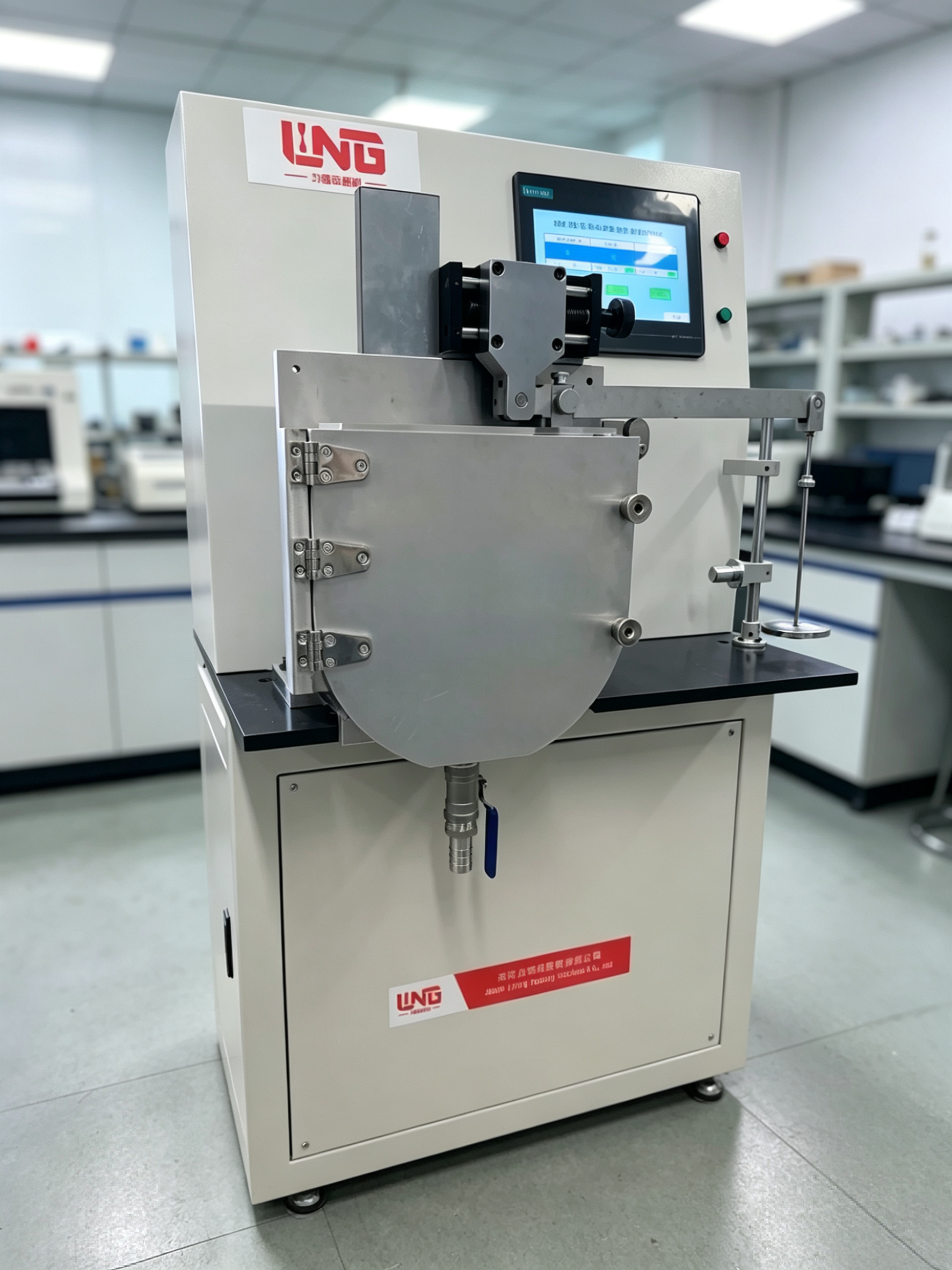
Abrasive wear is one of the most common forms of failure in construction machinery, and conducting standardized wear tests and exploring material wear mechanisms cannot be separated from professional testing equipment. Jinan Liling Testing Machine Co., Ltd. has independently developed the LLG-225 dry sand rubber wheel wear testing machine, which strictly follows the JB/T9396-1999 industry standard. With the integrated design of variable frequency speed regulation, graded weight loading, and fixed speed automatic shutdown, it accurately simulates the erosion and wear conditions of sand, mineral sand, and sediment grinding materials, providing standardized and high-precision wear resistance testing solutions for mining, construction, agriculture, mining, and transportation machinery manufacturing enterprises and major research institutes.
According to the technical solution of the equipment, the LLG-225 testing machine adopts a wet sand friction and wear test architecture. The rubber wheel rotates counterclockwise to drive the mortar abrasive to test the wear of metal and non-metal samples. The three core test parameters of speed, load, and mortar ratio can be flexibly adjusted to highly restore the actual service wear environment of the components. The maximum rated load of the equipment is 225N, and the speed range of the rubber wheel is 200-500r/min. It is infinitely variable frequency adjustable and comes standard with three types of Shore hardness rubber wheels: 50/60/70. The standard sample size is 57 × 25.5 × 6mm, and it also supports customized fixtures to adapt to irregular and non-standard samples, covering diverse material testing needs.
At the structural design level, the equipment is equipped with an adjustable fixture pivot mechanism, coupled with a dial gauge horizontal calibration process, to ensure that the load acts vertically on the center of the rubber wheel and eliminate test vibration errors; Equipped with LZN-48 intelligent digital counter and Hall sensor for real-time collection of operating pulses, it can preset 0-99999999 revolutions per minute. When the set value is reached, it will automatically shut down and avoid manual timing errors. The whole machine is equipped with five sets of standard weights, which can achieve multi-level load switching from 40N to 225N. The mortar ratio adopts the industry standard 10000g water combined with 1500g Guangdong Xinhui quartz sand scheme, which greatly improves the repeatability and stability of test data.
The complete standardized testing process is the core advantage of this model. The equipment testing is divided into four major stages: rubber wheel repair, hardness testing, sample pre grinding, and formal wear testing. Before each test, the rubber wheel is repaired with 320 # water sandpaper, and forced to be repaired every 10000 revolutions of operation; Record the hardness of the rubber wheel by taking the average value at the eight equal points of the Shore hardness tester; After demagnetization, alcohol cleaning, drying, and weighing, the sample is first pre ground at 1000 revolutions to eliminate surface defects, and then subjected to formal wear at 2000 revolutions. The material's wear resistance is quantified by the weight loss value of the sample, forming a complete and traceable test data chain. The equipment has clear specifications for the service life of rubber wheels, and if the diameter is less than 174mm, it needs to be scrapped and repaired to ensure consistency in testing from a hardware perspective.
The equipment weighs 400kg and is equipped with adjustable shock-absorbing pads. The overall levelness of the machine is controlled within 0.05/1000mm, ensuring smooth and low-noise operation; The power system is equipped with a 1.1KW three-phase 380V variable frequency motor, with a two-stage reduction transmission of belt and gear, ensuring stable power output. At the same time, a complete operation and maintenance system is in place, with bearing grease replaced every six months. After testing, the mud tank can be quickly flushed, and the lever weights are set for special use and cannot be mixed. The equipment is stored flat and lubricated regularly, greatly extending the service life of the entire machine.
In the current industrial field, equipment wear and frequent replacement of parts are prominent due to insufficient material wear resistance. The LLG-225 dry sand rubber wheel wear testing machine can complete wear-resistant material screening, coating erosion resistance verification, abrasive wear mechanism research and other work in the laboratory, helping enterprises optimize component selection, extend mechanical service life, and reduce equipment operation and maintenance costs. Jinan Leading Testing Machine stated that this model can customize and upgrade hardness testing devices, widen fixtures, and intelligent data recording modules according to customer needs, continuously providing reliable wear testing equipment support for equipment manufacturing, new material research and development, and quality inspection and testing industries.
LLG-225 wear testing machine, dry sand rubber wheel wear testing machine, abrasive wear detection, material wear resistance testing, mining engineering machinery testing, JB/T9396 standard, friction and wear testing equipment
According to the technical solution of the equipment, the LLG-225 testing machine adopts a wet sand friction and wear test architecture. The rubber wheel rotates counterclockwise to drive the mortar abrasive to test the wear of metal and non-metal samples. The three core test parameters of speed, load, and mortar ratio can be flexibly adjusted to highly restore the actual service wear environment of the components. The maximum rated load of the equipment is 225N, and the speed range of the rubber wheel is 200-500r/min. It is infinitely variable frequency adjustable and comes standard with three types of Shore hardness rubber wheels: 50/60/70. The standard sample size is 57 × 25.5 × 6mm, and it also supports customized fixtures to adapt to irregular and non-standard samples, covering diverse material testing needs.
At the structural design level, the equipment is equipped with an adjustable fixture pivot mechanism, coupled with a dial gauge horizontal calibration process, to ensure that the load acts vertically on the center of the rubber wheel and eliminate test vibration errors; Equipped with LZN-48 intelligent digital counter and Hall sensor for real-time collection of operating pulses, it can preset 0-99999999 revolutions per minute. When the set value is reached, it will automatically shut down and avoid manual timing errors. The whole machine is equipped with five sets of standard weights, which can achieve multi-level load switching from 40N to 225N. The mortar ratio adopts the industry standard 10000g water combined with 1500g Guangdong Xinhui quartz sand scheme, which greatly improves the repeatability and stability of test data.
The complete standardized testing process is the core advantage of this model. The equipment testing is divided into four major stages: rubber wheel repair, hardness testing, sample pre grinding, and formal wear testing. Before each test, the rubber wheel is repaired with 320 # water sandpaper, and forced to be repaired every 10000 revolutions of operation; Record the hardness of the rubber wheel by taking the average value at the eight equal points of the Shore hardness tester; After demagnetization, alcohol cleaning, drying, and weighing, the sample is first pre ground at 1000 revolutions to eliminate surface defects, and then subjected to formal wear at 2000 revolutions. The material's wear resistance is quantified by the weight loss value of the sample, forming a complete and traceable test data chain. The equipment has clear specifications for the service life of rubber wheels, and if the diameter is less than 174mm, it needs to be scrapped and repaired to ensure consistency in testing from a hardware perspective.
The equipment weighs 400kg and is equipped with adjustable shock-absorbing pads. The overall levelness of the machine is controlled within 0.05/1000mm, ensuring smooth and low-noise operation; The power system is equipped with a 1.1KW three-phase 380V variable frequency motor, with a two-stage reduction transmission of belt and gear, ensuring stable power output. At the same time, a complete operation and maintenance system is in place, with bearing grease replaced every six months. After testing, the mud tank can be quickly flushed, and the lever weights are set for special use and cannot be mixed. The equipment is stored flat and lubricated regularly, greatly extending the service life of the entire machine.
In the current industrial field, equipment wear and frequent replacement of parts are prominent due to insufficient material wear resistance. The LLG-225 dry sand rubber wheel wear testing machine can complete wear-resistant material screening, coating erosion resistance verification, abrasive wear mechanism research and other work in the laboratory, helping enterprises optimize component selection, extend mechanical service life, and reduce equipment operation and maintenance costs. Jinan Leading Testing Machine stated that this model can customize and upgrade hardness testing devices, widen fixtures, and intelligent data recording modules according to customer needs, continuously providing reliable wear testing equipment support for equipment manufacturing, new material research and development, and quality inspection and testing industries.
LLG-225 wear testing machine, dry sand rubber wheel wear testing machine, abrasive wear detection, material wear resistance testing, mining engineering machinery testing, JB/T9396 standard, friction and wear testing equipment
Previous: The complete set of testing equipment for Jinan Leading Testing Machine has been delivered to Sichuan Highway Engineering Consulting and Supervision Company, and on-site debugging has been successfully completedNext: Four-piece metal impact test, one-stop solution for impact toughness testing.
About LiLing
Product range
News
Contact LiLing
National Service Hotline:+8618660398828
Address:山东省济南市市中区魏华西路6号院内2号厂房


Business consultation (WeChat)
Technical Support: ChaoYueHuLian
Links: