News (click to select category)
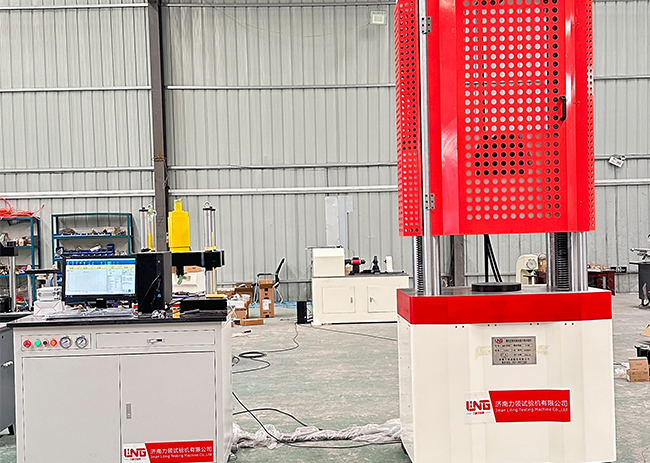
200 ton microcomputer controlled electro-hydraulic servo universal testing machine
Date:2026-05-27ID: 335Heat:
1、 Core positioning: 200 ton heavy-duty mechanical testing main model
The core advantage of WAW 2000D lies in its 200 ton ultra large testing force, which breaks through the load limitations of conventional testing machines. It can conduct comprehensive mechanical tests on materials and components under heavy load conditions such as high-strength steel, large components, steel wire ropes, chains, and welding electrodes. It is suitable for industries such as heavy machinery, rail transportation, ships, and steel structures that have rigid requirements for large load detection. It is a standard equipment for quality supervision agencies, large enterprise laboratories, and university training centers.
2、 Structure and Principle: Mechanical+Electrical+Hydraulic Trinity
1. The mechanical structure host consists of an adjustable support frame (machine base, screw rod, moving crossbeam) and a working frame (oil cylinder, piston, fixed crossbeam). The tensile test is completed between the fixed crossbeam and the moving crossbeam, and the compression test is performed between the platform and the moving crossbeam. The test space can be precisely adjusted by driving the screw with a motor to adapt to different sizes of specimens.
2. The electrical system adopts three-phase four wire 380V/50Hz power supply, equipped with overcurrent circuit breaker protection, thermal relay, and automatic power-off triple protection to ensure the safety of high-voltage operation; Jogging control achieves precise positioning of the lower jaw, and the testing process is stable and controllable.
3. The high-pressure oil pump of the hydraulic system drives the piston movement of the oil cylinder, providing a continuous and stable loading force of 200 tons; Using 46 #/68 # hydraulic oil, N100 # oil can be added to increase viscosity under high temperature conditions. The oil level in the tank should be controlled at 2/3 of the level gauge to ensure no leakage or air resistance.
four
3、 Installation and debugging: precise positioning, meeting standards in one go
1. Environmental requirements include room temperature of 6 ℃~30 ℃, humidity ≤ 80%, no vibration, no corrosion, and no electromagnetic interference; The host is reliably grounded, with a levelness of ≤ 0.2/1000, and a reserved operating and maintenance space of ≥ 0.7m in the surrounding area.
2. Installation points: Concrete foundation fixation → Column verticality correction → Hydraulic pipeline cleaning and connection → Electrical wiring and phase sequence verification → System exhaust → No load test. If there is no oil leakage and the operation is smooth throughout the entire process, it is considered qualified.
3. The key configuration comes standard with a 2000kN spoke load sensor, a pull-out displacement sensor, a fully digital closed-loop controller, and dedicated measurement and control software. It is paired with an ASUS computer and HP printer to achieve integrated data acquisition, curve generation, and report printing.
4、 Operating standards: Safety first, standard procedures
Taking the tensile test as an example, the standard process is: power on the pump → select the clamp → clamp the sample → set the speed → start the test → break the sample → stop the machine for sampling. Strictly adhere to safety guidelines during operation: no one is allowed to stand around during the experiment; Prohibit starting the oil pump under high pressure; It is strictly prohibited to move the crossbeam up and down during the experiment; Non professionals are not allowed to operate to eliminate the risk of misoperation.
5、 Maintenance and troubleshooting: Long term stability, fast repair
1. Daily maintenance: Regularly clean and rust proof the machine body, and check the oil quantity and quality of hydraulic oil every 1-3 months; Fasteners, screw chains, and clamp plates are regularly tightened, lubricated, and cleaned to maintain equipment accuracy.
2. Common troubleshooting
1. Abnormal noise/vibration in the fuel tank: If the oil temperature is too high, replace it with high viscosity oil or stop the machine to cool down.
2. Unable to reach the rated force of 200 tons: Clean the differential pressure valve, replace the sealing gasket to eliminate leakage.
3. Jaw slippage: Clean the iron filings on the sliding surface and apply graphite butter blending agent.
4. Poor lifting of the crossbeam: Clean the screw, lubricate it, and tighten the locking screws.
6、 Application value: Industrial demand for 200 ton level testing
With a powerful loading capacity of 200 tons, precise control by microcomputer servo, improved safety protection, and standardized operating procedures, it has become an ideal equipment for large load mechanical testing. It not only provides accurate data for material research and quality control, but also supports key processes such as factory inspection and engineering acceptance of large components. It is a heavy-duty testing tool in the industrial manufacturing field to ensure product quality and improve production safety.
The core advantage of WAW 2000D lies in its 200 ton ultra large testing force, which breaks through the load limitations of conventional testing machines. It can conduct comprehensive mechanical tests on materials and components under heavy load conditions such as high-strength steel, large components, steel wire ropes, chains, and welding electrodes. It is suitable for industries such as heavy machinery, rail transportation, ships, and steel structures that have rigid requirements for large load detection. It is a standard equipment for quality supervision agencies, large enterprise laboratories, and university training centers.
2、 Structure and Principle: Mechanical+Electrical+Hydraulic Trinity
1. The mechanical structure host consists of an adjustable support frame (machine base, screw rod, moving crossbeam) and a working frame (oil cylinder, piston, fixed crossbeam). The tensile test is completed between the fixed crossbeam and the moving crossbeam, and the compression test is performed between the platform and the moving crossbeam. The test space can be precisely adjusted by driving the screw with a motor to adapt to different sizes of specimens.
2. The electrical system adopts three-phase four wire 380V/50Hz power supply, equipped with overcurrent circuit breaker protection, thermal relay, and automatic power-off triple protection to ensure the safety of high-voltage operation; Jogging control achieves precise positioning of the lower jaw, and the testing process is stable and controllable.
3. The high-pressure oil pump of the hydraulic system drives the piston movement of the oil cylinder, providing a continuous and stable loading force of 200 tons; Using 46 #/68 # hydraulic oil, N100 # oil can be added to increase viscosity under high temperature conditions. The oil level in the tank should be controlled at 2/3 of the level gauge to ensure no leakage or air resistance.
four
3、 Installation and debugging: precise positioning, meeting standards in one go
1. Environmental requirements include room temperature of 6 ℃~30 ℃, humidity ≤ 80%, no vibration, no corrosion, and no electromagnetic interference; The host is reliably grounded, with a levelness of ≤ 0.2/1000, and a reserved operating and maintenance space of ≥ 0.7m in the surrounding area.
2. Installation points: Concrete foundation fixation → Column verticality correction → Hydraulic pipeline cleaning and connection → Electrical wiring and phase sequence verification → System exhaust → No load test. If there is no oil leakage and the operation is smooth throughout the entire process, it is considered qualified.
3. The key configuration comes standard with a 2000kN spoke load sensor, a pull-out displacement sensor, a fully digital closed-loop controller, and dedicated measurement and control software. It is paired with an ASUS computer and HP printer to achieve integrated data acquisition, curve generation, and report printing.
4、 Operating standards: Safety first, standard procedures
Taking the tensile test as an example, the standard process is: power on the pump → select the clamp → clamp the sample → set the speed → start the test → break the sample → stop the machine for sampling. Strictly adhere to safety guidelines during operation: no one is allowed to stand around during the experiment; Prohibit starting the oil pump under high pressure; It is strictly prohibited to move the crossbeam up and down during the experiment; Non professionals are not allowed to operate to eliminate the risk of misoperation.
5、 Maintenance and troubleshooting: Long term stability, fast repair
1. Daily maintenance: Regularly clean and rust proof the machine body, and check the oil quantity and quality of hydraulic oil every 1-3 months; Fasteners, screw chains, and clamp plates are regularly tightened, lubricated, and cleaned to maintain equipment accuracy.
2. Common troubleshooting
1. Abnormal noise/vibration in the fuel tank: If the oil temperature is too high, replace it with high viscosity oil or stop the machine to cool down.
2. Unable to reach the rated force of 200 tons: Clean the differential pressure valve, replace the sealing gasket to eliminate leakage.
3. Jaw slippage: Clean the iron filings on the sliding surface and apply graphite butter blending agent.
4. Poor lifting of the crossbeam: Clean the screw, lubricate it, and tighten the locking screws.
6、 Application value: Industrial demand for 200 ton level testing
With a powerful loading capacity of 200 tons, precise control by microcomputer servo, improved safety protection, and standardized operating procedures, it has become an ideal equipment for large load mechanical testing. It not only provides accurate data for material research and quality control, but also supports key processes such as factory inspection and engineering acceptance of large components. It is a heavy-duty testing tool in the industrial manufacturing field to ensure product quality and improve production safety.
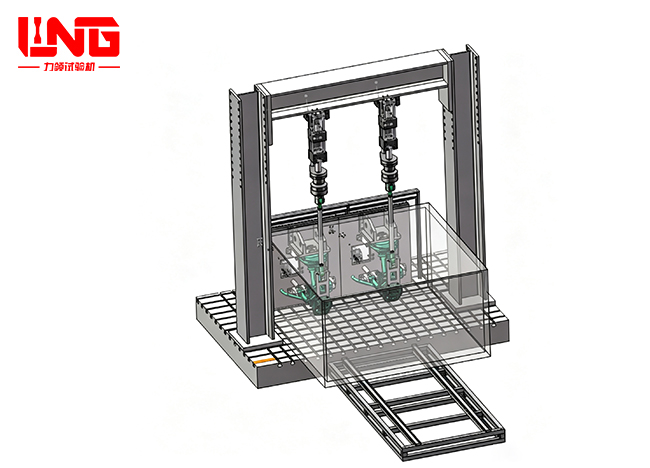
PLS-W25 Four Channel Electro Hydraulic Servo Air Spring Fatigue Test System
The PLS-W25 four channel electro-hydraulic servo air spring ...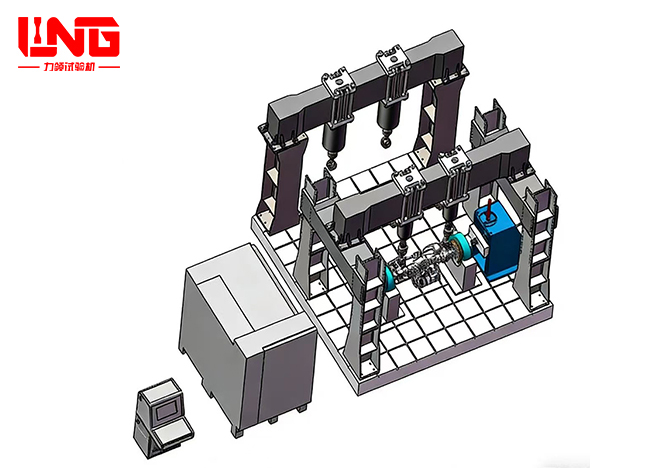
PWS-1000CQ comprehensive performance testing platform for drive axle housing
The comprehensive performance testing platform for the drive...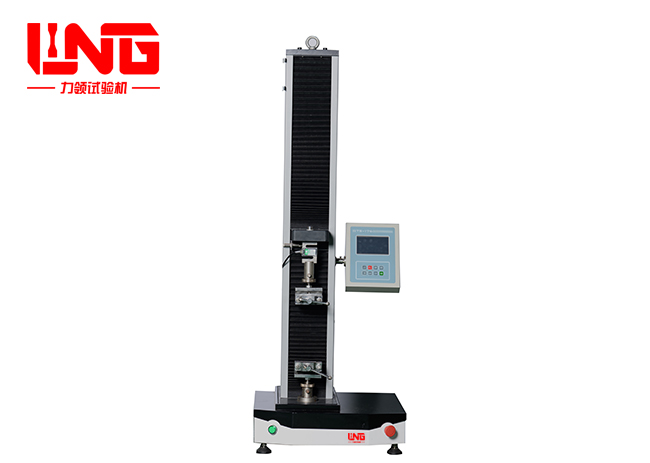
Single-arm digital display electronic universal testing machine
WDS series digital display single-arm electronic universal t...
Geotextile roof tear testing machine
Geotextile testing machine can achieve nearly perfect closed...
60 ton electro-hydraulic servo steel strand universal dual-use testing machine
Specially designed for mechanical performance testing of pre...
WE-100B Manual tightening digital display hydraulic universal testing machine
The LCD digital universal testing machine is used for tensil...
WE-1000B Digital display hydraulic universal testing machine
Liquid crystal digital display universal testing machine for...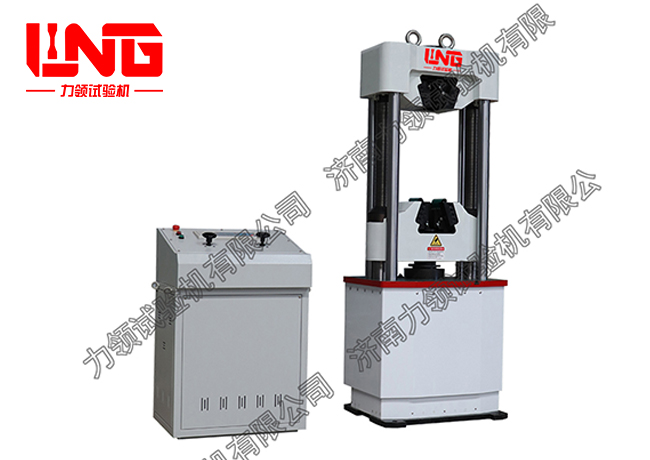
WE-600BDigital hydraulic universal testing machine
The LCD digital universal testing machine is used for tensil...
About LiLing
Product range
News
Contact LiLing
National Service Hotline:+8618660398828
Address:山东省济南市市中区魏华西路6号院内2号厂房


Business consultation (WeChat)
Technical Support: ChaoYueHuLian
Links: